

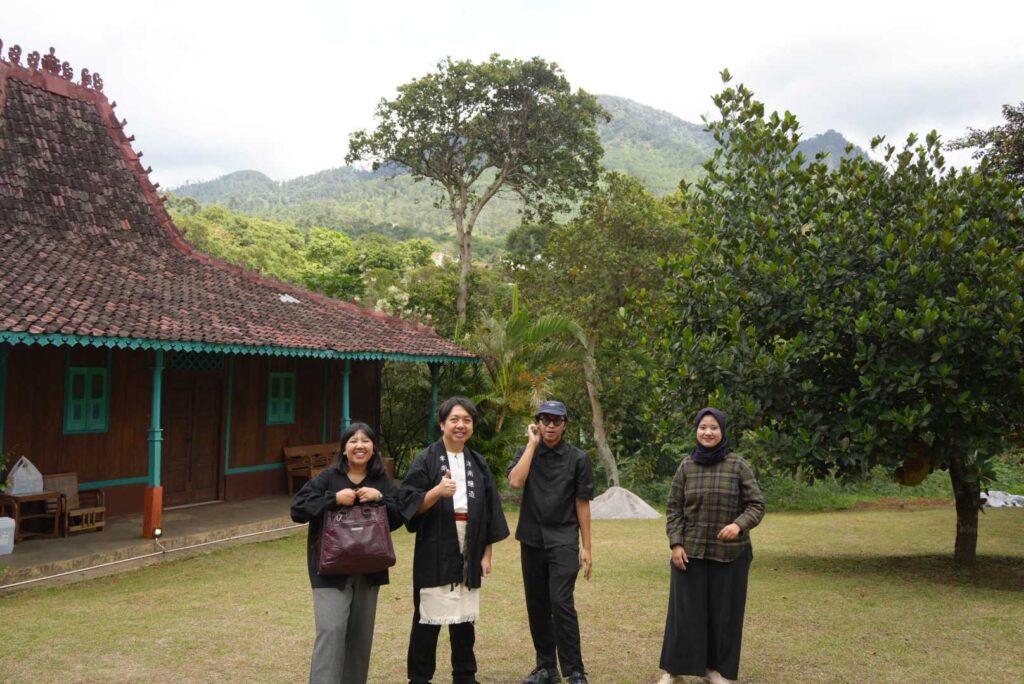
BANDUNG, INDONESIA – In a significant move bridging traditional Japanese craftsmanship with Southeast Asian deep-tech innovation, Dr. Kengo Suzuki, President of Tsunan Sake Brewery (Headquarters: Tsunan, Niigata) and CEO of Space Seed Holdings Inc., conducted a strategic visit to Bell Living Lab (also known as Bell Society) in Bandung, West Java, on February 6, 2026.
Accompanied by Nur Akmalia Hidayati, a researcher from the National Research and Innovation Agency (BRIN), the delegation met with Arka Irfani, CEO and Co-founder of Bell Living Lab. The visit featured an in-depth tour of Bell’s production facility and a high-level roundtable discussion on the future of bio-manufacturing, circular economics, and the potential applications of fermentation technology in space exploration.
The Global Challenge: Fashion’s Environmental Footprint
To understand the significance of this meeting, one must look at the global context. The traditional leather industry is one of the most resource-intensive sectors in the world. Producing a single square meter of animal leather requires roughly 17,000 liters of water and often involves the use of chromium and other toxic chemicals for tanning, which can cause severe soil and water pollution. Furthermore, the synthetic alternatives—PU (polyurethane) and PVC (polyvinyl chloride) leather—are derived from fossil fuels and contribute significantly to the microplastic crisis.
Enter Bell Living Lab. Based in Indonesia, the world’s fourth-largest coffee producer, the company addresses two problems simultaneously: the massive environmental burden of the fashion industry and the disposal of agricultural waste.
Inside Bell Living Lab: The Alchemy of Coffee and Bacteria
During the facility tour, Mr. Irfani showcased the company’s flagship innovation, M-Tex. Unlike traditional leather, M-Tex is grown, not born.
“Indonesia produces immense amounts of coffee, but with that comes immense waste,” explained Mr. Irfani. “Coffee cherry pulp, the skin of the coffee fruit, is often discarded and left to rot, releasing greenhouse gases. We saw this not as waste, but as a nutrient source.”


Dr. Kengo and Ms. Hidayati were given a detailed look at the proprietary process:
– Feedstock Preparation: Coffee pulp is collected from local farmers, preventing it from ending up in landfills. This creates an additional revenue stream for the agricultural community.
– Bacterial Fermentation: The pulp is processed into a nutrient-rich medium. Specific strains of bacteria (similar to Acetobacter xylinum) are introduced. These bacteria consume the sugars in the coffee waste and metabolize them into pure cellulose nanofibers.
– Sheet Formation: Over a period of weeks, these nanofibers weave themselves into a thick, durable mat on the surface of the liquid. This “pellicle” is the raw material for the leather.
– Finishing: The cellulose sheets are harvested, washed, dried, and treated with natural formulations to achieve the texture, color, and durability required for high-end fashion and upholstery.
The result is a material that is 100% vegan, cruelty-free, and remarkably strong, with a texture that rivals premium animal leather. Bell Living Lab also produces Kalpa, a composite material made from coffee chaff (the dried skin of the bean) mixed with recycled plastic, used for furniture and interior design, further demonstrating their commitment to a zero-waste philosophy.


The “Fermentation Symbiosis”: A Meeting of Minds
For Dr. Kengo Suzuki, a scientist with dual PhDs in Agriculture and Medicine, the visit was a confirmation of a scientific truth he has long advocated: Fermentation is the ultimate manufacturing engine.
At Tsunan Sake Brewery in Niigata, Japan, Dr. Kengo oversees “Smart Brewing,” where AI optimizes the complex interplay of Koji mold (Aspergillus oryzae) and yeast to ferment rice into sake. Standing in the Bell Living Lab facility, surrounded by fermentation trays growing cellulose sheets, Dr. Kengo drew a powerful parallel.
“The biological principles here are strikingly similar to sake brewing,” Dr. Kengo remarked during the discussion. “In Tsunan, we guide microbes to create flavor and alcohol from rice. In Bandung, Bell Living Lab guides microbes to create structure and textiles from coffee. We are both ‘Microbial Shepherds.’ The difference is only in the output; the engine—fermentation—is the same.”
This shared “common language” of biotechnology allowed for a deep technical exchange. Dr. Kengo and Mr. Irfani discussed the potential of applying the data-logging and AI analysis techniques used in Smart Brewing to the bacterial growth cycles of M-Tex. By monitoring temperature, pH, and humidity with greater precision, the production of bio-leather could be made faster and more consistent, a crucial step for scaling up to meet global demand.
From Earth to the Moon: A Vision for 2040
The conversation extended far beyond Earth. As CEO of Space Seed Holdings, Dr. Kengo is architecting a future where humans can live sustainably on the Moon by 2040. A critical barrier to space colonization is the inability to transport heavy resources from Earth.
“On the Moon or Mars, we cannot bring cows for leather, nor can we grow cotton fields,” said Dr. Kengo. “We must produce everything locally using closed-loop systems. Bell Living Lab’s model is a perfect blueprint for space manufacturing. If we can use the waste from our food (like coffee or other crops) to grow our clothes and building materials using bacteria, we solve the problem of resource scarcity in space.”
Ms. Hidayati of BRIN emphasized the importance of such cross-border collaborations in accelerating these futuristic goals. “Indonesia has the biodiversity and the biomass. Japan has the precision technology and the space vision. Bringing researchers from BRIN, innovators like Bell Living Lab, and visionaries like Dr. Kengo together creates a unique ecosystem for deep-tech acceleration.”
Future Outlook
The visit concluded with a commitment to explore joint research opportunities. Potential areas of collaboration include:
– Strain Improvement: Utilizing Japanese genomic analysis to identify hyper-efficient bacterial strains for cellulose production.
– Upcycling Synergy: Testing whether sake lees (sake-kasu) from Tsunan could serve as a nutrient source for Bell Living Lab’s bacterial cultures, creating a product that is a hybrid of Japanese and Indonesian agricultural heritage.
– Market Expansion: Introducing Bell Living Lab’s sustainable materials to the Japanese market, where consumer awareness of SDGs (Sustainable Development Goals) is high.
This meeting between Tsunan Sake Brewery and Bell Living Lab serves as a testament to the power of bio-innovation. It highlights a shift in industrial paradigms: from extraction to cultivation, from waste to wealth, and from local tradition to universal application.


About Bell Living Lab (PT. Kurva Lonceng Khatulistiwa)
Bell Living Lab is an Indonesian biomaterial research company and social enterprise. Co-founded by CEO Arka Irfani, the company specializes in converting agricultural waste—specifically from coffee production—into sustainable materials like M-Tex (vegan leather) and Kalpa (bio-composite). They are dedicated to creating a circular economy that benefits both the environment and local farmers.
About Space Seed Holdings Inc.
Space Seed Holdings is a “Space Deep Tech Venture Builder” focused on turning science fiction into reality. With a mission to enable long-term human habitation in space, the company invests in and develops technologies related to longevity, food production, and resource recycling, bridging terrestrial solutions with extraterrestrial challenges.
About Tsunan Sake Brewery Co., Ltd.
Located in the heavy snowfall region of Tsunan, Niigata Prefecture, Tsunan Sake Brewery is a pioneer in “Terroir Sake.” Under the leadership of Dr. Kengo Suzuki, the brewery integrates traditional techniques with “Smart Brewing” AI technology and sustainable practices. The company actively engages in upcycling projects and community-based revitalization.
https://tsunan-sake.com/
